

Table of Contents
- What Makes Gear for Ocean Water Sports Last
- Saltwater-Resistant Water Sports Gear: What to Look For
- Best Life Jackets for Water Sports: Fit, Flotation, and Safety
- Water Sports Gear Maintenance: A Simple Routine
- How to Rinse and Store Water Sports Gear
- Repair or Replace? Lifecycle Costs of Durable Ocean Gear
- Frequently Asked Questions
Last Updated: October 6, 2026
What Makes Gear for Ocean Water Sports Last
Durable gear for ocean water sports is equipment built to survive three relentless forces: saltwater corrosion, UV degradation, and mechanical abrasion from sand and use. The difference between gear that lasts one season and gear that lasts five comes down to materials, construction, and how you care for it.
Here's the part most buyers get wrong: they shop by color and fit, then wonder why seams fail or zippers seize after a few months of salt exposure. The materials and hardware you can't see matter more than the print you can.
That's the throughline of this guide. We'll cover what actually survives salt, sun, and sand, how to match gear to your sport, a maintenance routine that takes minutes, and when repair beats replacement. The payoff is simple: less money spent re-buying the same item every year.
Materials That Survive Salt, Sun, and Sand
Neoprene, high-denier nylon, and polyester dominate quality water sports equipment because each resists a different threat. Neoprene handles thermal insulation in wetsuits and dive skins. Nylon and polyester resist UV breakdown and dry fast. The weak point is rarely the main fabric; it's the coatings and laminates bonded to it.
Look for gear that names its fabric content rather than hiding it. A rash guard labeled 80% nylon and 20% spandex, like our Cressi camo dive shirt, tells you it will stretch, recover, and hold its shape. A generic "swim fabric" label tells you nothing.
Sun protection is part of durability, too. According to the Skin Cancer Foundation's sun protection guidance, UPF-rated clothing is one of the most reliable forms of UV defense for extended water exposure.
Stitching, Seams, and Hardware: The Hidden Weak Points
Flatlock stitching and taped seams are what keep water out and fabric together. A standard overlock stitch creates a raised ridge that chafes under a wetsuit and frays faster in saltwater. Flatlock lays the seam flat against the skin, which reduces drag and abrasion at the same time.
Hardware fails before fabric does. Salt crystals work into zipper teeth and corrode low-grade metal within weeks. Non-corrosive zippers, sealed pulls, and reinforced stress points at shoulders and knees are the marks of gear designed for saltwater rather than pool water.
Our Odepro SD1500 dive light is a good example of hardware built for the environment: aerospace-grade aluminum with anodized treatment, dual O-ring seals, and salt-spray tested corrosion resistance. That's the standard to hold every piece of your kit to, not just electronics.

Saltwater-Resistant Water Sports Gear: What to Look For
Saltwater-resistant water sports gear uses non-corrosive hardware, coated fabrics, and sealed seams to slow the two things that destroy equipment fastest: oxidation and salt crystal abrasion. You can spot it before you buy by checking three specific features.
First, examine the zippers and buckles. Plastic or marine-grade stainless steel won't rust. Second, check whether seams are taped or welded rather than simply stitched. Third, confirm the fabric has a durable water-repellent finish, which sheds salt and keeps the material from stiffening.
| Feature | Weak Version | Durable Version | Why It Matters |
|---|---|---|---|
| Seams | Overlock stitch | Flatlock or taped | Resists fraying and chafing |
| Zippers | Standard metal | Non-corrosive or plastic | Prevents salt seize-up |
| Fabric | Uncoated blend | DWR-treated nylon/poly | Sheds salt, dries faster |
| Hardware | Painted metal | Marine-grade stainless | Blocks oxidation |
Fins deserve the same scrutiny. Our long blade diving fins use high-strength polypropylene blades with tear-resistant TPR foot pockets, a combination that transfers power without cracking under repeated flex. Blades that snap are almost always cheap composites, not the blade shape itself.

Best Life Jackets for Water Sports: Fit, Flotation, and Safety
The best life jacket for water sports is one that fits snugly, matches your activity's flotation needs, and carries the right safety rating for the conditions. Fit beats features every time: a loose vest rides up and can't keep your head above water.
For paddling, kayaking, and general boating, a Type III vest offers good mobility and flotation for calm inland and coastal water. For offshore or rough conditions, a Type I offshore vest provides more buoyancy and turns an unconscious wearer face-up. Match the type to where you'll actually be, not where you hope to be.
Fit checklist before you buy:
- Cinch the side straps; you should not be able to pull the vest up over your ears
- Check that the vest doesn't ride above your chin when you raise both arms
- Confirm the rating matches your activity and water type
- Test buckles and zippers for smooth, secure closure
- Verify the vest is sized for body weight, not just chest measurement
The U.S. Coast Guard's life jacket requirements and approval guidance is the authority on what counts as an approved personal flotation device and which types suit which conditions. Check it before you buy anything for open water.
Water Sports Gear Maintenance: A Simple Routine
Water sports gear maintenance comes down to one habit: rinse with fresh water after every use. Salt left to dry on fabric and hardware is the single biggest cause of premature failure, and rinsing removes it before it does damage. But rinsing alone is not a maintenance program.
Here is the routine that separates long-lived kits from annual replacements.
After every session (about five minutes):
Odepro SD1500 Dive Light — 1500 Lumen Rechargeable Scuba Flashlight →
- Rinse wetsuits, rash guards, and swimwear in cool fresh water. Warm water can degrade laminates and set odors.
- Work zippers open and closed several times under running water to flush salt crystals from the teeth and sliders.
- Rinse fins, masks, snorkels, and any hardware thoroughly, paying attention to buckles and adjustment points where salt collects.
- Rinse the inside of booties and gloves, not just the outside. Salt trapped against the skin side is what stiffens neoprene.
- Hang everything to dry in shade, never direct sun.
- Never leave wet gear balled up in a bag or bin, even overnight.
Weekly or before storage:
- Inspect seams for pulled stitches, delamination, or whitish salt bloom that signals incomplete rinsing.
- Check O-rings and seals on lights, cameras, and any sealed housing. A dry, cracked O-ring is the most common cause of water intrusion.
- Lubricate zippers with a silicone or wax-based product made for marine use. Petroleum-based lubricants can degrade rubber and neoprene.
- Test buckles, straps, and closures under load, not just by clicking them once.
Drying mechanics matter more than people expect. Direct sun dries gear fast but also degrades elastic fibers and coatings, undoing the UV resistance you paid for. A shaded rack with airflow dries gear overnight without the damage.
For dive lights and electronics, follow the manufacturer's guidance on seals and O-rings. Our Odepro SD1500 ships with spare O-rings precisely because those seals are the part that eventually needs attention, not the light itself.
How to Rinse and Store Water Sports Gear
How to rinse and store water sports gear properly determines whether it lasts two seasons or ten. Rinse with fresh water, dry completely in shade, and store loosely in a cool, dry place away from sunlight and heat.
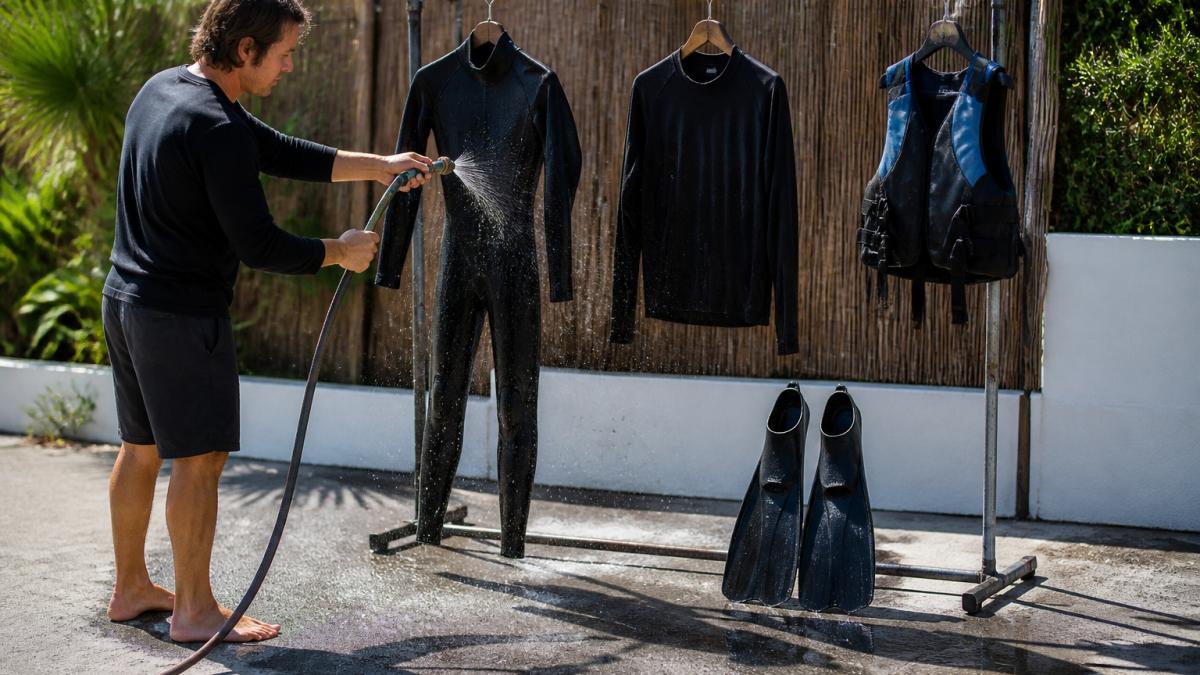
Storage is where good intentions fall apart. Gear shoved into a hot garage or a sealed plastic tub traps moisture and bakes in heat, which breaks down neoprene and coatings faster than any ocean session will.
A few storage rules worth following:
- Store dry, never damp
- Keep out of direct sun and extreme heat
- Hang wetsuits rather than folding them
- Loosen straps and buckles so they don't take a permanent set
- Inspect O-rings and seals each time you put gear away
That last point catches problems early, when they're cheap to fix.
Repair or Replace? Lifecycle Costs of Durable Ocean Gear
Repair usually beats replacement for high-quality ocean gear, because the expensive part, the fabric and construction, outlasts the cheap parts.
Repair when the core is intact. A wetsuit with a blown seam can be re-stitched with a blind stitch and sealed with neoprene cement. A rash guard with a pulled hem can be re-bound.

Replace when the structure has failed. Cracked neoprene, delaminated coatings, torn fabric beyond the seam, corroded hardware that cannot be swapped, or a cracked fin blade.
The lifecycle math. A budget item that fails in one season gets replaced three times over three years, while a durable piece gets maintained and lasts the whole stretch.
We build Species around that idea: apparel and equipment for water lovers that holds up on land and sea, so you buy once and maintain it instead of re-buying every summer.
Frequently Asked Questions
What materials hold up best in salt water?
Neoprene, nylon-spandex blends, and polyester dry fastest and resist salt damage. Look for 190 g/m² nylon-spandex rash guards, anodized aluminum hardware, and marine-grade stainless steel. Avoid untreated brass and mild steel, which corrode quickly. Rinse everything in fresh water after each use to extend life by seasons.
How do you keep water sports gear from getting damaged by salt water?
Rinse all gear with fresh water within a few hours of leaving the ocean. Salt crystals abrade fibers and speed corrosion. For wetsuits, use a mild wetsuit shampoo every few sessions. Dry in shade, never direct sun. Store loosely folded, not compressed. This simple water sports gear maintenance routine prevents most salt-related breakdowns.
How often should you replace water sports equipment?
Replace gear when function degrades, not on a fixed schedule. Life jackets lose flotation when foam cracks or seams fail, usually after 5-7 years of regular use. Wetsuits thin and lose warmth after 2-4 seasons. Fins crack at the blade root. Inspect before each season and replace when safety or performance drops.
What should you look for when buying durable water sports gear?
Check material specs, seam construction, and hardware. For rash guards, UPF 50+ and quick-dry polyester or nylon-spandex hold up best. For life jackets, look for US Coast Guard approval and sturdy zippers. For fins, replaceable blades extend life. Saltwater-resistant water sports gear uses anodized or marine-grade metals and reinforced stitching at stress points.
Which water sports gear is worth investing in?
Prioritize safety and high-use items: a well-fitted life jacket, a quality wetsuit or drysuit, and durable fins. These take the most abuse and protect you. A UPF 50+ rash guard like the Species Men's 1/4 Zip Rash Guard Hoodie ($69.44) lasts many seasons. Cheap alternatives often fail within a year, costing more over time.
How do you rinse and store water sports gear?
Rinse everything with fresh water after each use. For wetsuits, turn inside out and hang to dry in shade. Rinse life jackets with mild soap and air dry fully before storing. Keep gear out of direct sun and away from heat. Store loosely in a cool, dry place. This prevents mold, corrosion, and fabric breakdown.
The ocean is unforgiving to equipment that isn't built for it, and the difference between gear that lasts and gear that fails usually comes down to materials, hardware, and a five-minute rinse. Species makes apparel and equipment designed for exactly that environment, from UPF 50+ rash guards and dive skins to fins and dive lights built to handle saltwater. Explore our unique collection today and find gear that earns its place in your kit season after season.